
Martial Arts · Ayurveda · Nature & Exploration · Indian Food
A 3-Day Kalari Immersion (in association with Athma Kalari, Vilayur)
 image1 / 8
The experience
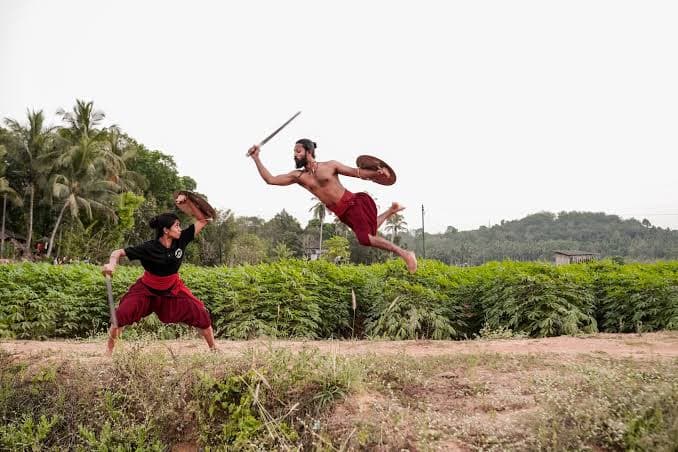
A three-day, ten-seat immersion built with Athma Kalari, Vilayur — a working Kalari school in the Thrissur district where the gurukkal continues the central-Kerala lineage of Kalaripayattu. Friday morning you land in Calicut and drive an hour and a half into Vilayur; by afternoon you're walking the kalari's puttara with the gurukkal, learning the school's lineage, the layout of the seven-step floor, and the first four vadivu. Saturday is the practice day — early-morning Kalari session, traditional Kalari massage and rejuvenation, then an extended cooking-and-tasting session of Kerala cuisine with the homestay cook (appam, puttu, kappa, fish curry), a half-day forest trek to a nearby temple, and a full Kalari exhibition by senior students. Sunday opens with optional Kerala pond swimming under a certified lifeguard, then a darshan at Guruvayoor and a farewell Sadhya before the drive back to Calicut. Two nights in a Vilayur homestay; tempo traveller for the full Calicut round-trip.
Why this matters
Kalaripayattu is the original martial art of the region, and the kalari is still the only place it is taught in full — stances, body conditioning, weapons, and the marma-point knowledge that connects it to Kerala's massage and Ayurvedic traditions. A tour built around a real working school (rather than a tourist demo) is the difference between watching a form and entering the kalari as a student.
Cultural background
Athma Kalari is one of a small number of Kalari schools in central Kerala still teaching the full syllabus — daily practice, the twelve fundamental stances (vadivu), footwork patterns, weapons work, and the marma system. Kalari training historically included oil massage (uzhichil) and body conditioning alongside combat, and the same families have trained fighters, performers, and therapists for centuries. Vilayur is a small village in the Thrissur district, ~1.5 hours from Calicut airport and ~45 minutes from Thrissur city, and sits in the heart of the central-Kerala Kalari belt. Guruvayoor, the temple that closes the trip, is one of Kerala's holiest Krishna temples — open to all visitors in the outer precincts, with traditional modest-dress protocol.
Schedule
- 1
Day 1 · 09:30 – 10:00
Arrival at Calicut airport / railway station · meet & greet · group transfer to Vilayur (~1.5 hrs)
- 2
Day 1 · 11:30 – 13:30
Check in at homestay · welcome tea & banana chips · Kerala lunch (rice, sambar, avial, thoran, curd)
- 3
Day 1 · 14:30 – 16:30
Welcome tour of Athma Kalari — gurukkal's introduction to the school, lineage, kalari layout (puttara, sapta konam), the 12 vadivu
- 4
Day 1 · 16:30 – 18:00
First Kalari session — light body conditioning, first 4 vadivu, basic footwork patterns
- 5
Day 1 · 19:00 – 20:30
Kerala dinner — appam + stew, puttu + kadala curry, kappa + fish curry (veg / non-veg options)
- 6
Day 2 · 06:00 – 07:30
Morning Kalari session — body conditioning (uzhichil + salutations), combat forms (verumkai), short weapons intro (kadaram, val)
- 7
Day 2 · 07:30 – 09:00
Traditional Kalari massage & rejuvenation session (groups of 2 rotate through the practitioner) · shower · breakfast
- 8
Day 2 · 11:00 – 13:30
Local cuisine cooking-and-tasting session with the homestay cook — appam batter grinding, puttu steaming, kappa preparation, fish curry masala. Eat what you make.
- 9
Day 2 · 15:00 – 17:30
Half-day trek to Pattikkad Bhagavathy temple or Thiruvilwamala (~2.5 km moderate forest walk). Tea at the temple stall.
- 10
Day 2 · 18:00 – 19:00
Kalari exhibition — full demonstration by senior students: long weapons (kuntham, val), short weapons, marma application. Tea with the gurukkal.
- 11
Day 3 · 06:00 – 07:30
Kerala pond swimming with certified lifeguard on duty (optional — guests may skip)
- 12
Day 3 · 09:30 – 11:30
Transfer to Guruvayoor (~1 hr) · temple darshan · circumambulation
- 13
Day 3 · 13:00 – 14:30
Farewell Sadhya — full vegetarian banana-leaf feast at a traditional local restaurant
- 14
Day 3 · 15:00 – 17:30
Transfer back to Calicut (airport / railway station). Drop · farewell · group photo.
Difficulty
Moderate — daily Kalari practice, traditional massage, half-day forest trek
Age suitability
14 and up; under-18 must be accompanied by a parent/guardian
Included
- 1 morning Kalari session with the Athma Kalari gurukkal
- 1 traditional Kalari massage & rejuvenation session
- Live Kalari exhibition by senior students
- Half-day trek to a nearby forest temple
- Kerala pond swimming with certified lifeguard support
- Guruvayoor temple visit & darshan
- Welcome tour of Athma Kalari school
- 2 nights homestay / heritage-stay in Vilayur
- All meals (Kerala home-style + Sadhya on Day 3)
- All ground transfers (Calicut ↔ Vilayur ↔ Guruvayoor)
- Local cuisine cooking-and-tasting session
- WRIKSH organizer on-site throughout
Not included
- Flights / trains to / from Calicut
- Personal expenses and donations at temples
- Travel insurance
- Anything not listed above
Before you arrive
- · Wear loose, breathable cotton clothing for Kalari practice — no zippers, no metal buckles
- · Bring older clothes and a towel for the daily oil massage (uzhichil)
- · Guruvayoor temple visit requires modest clothing — covered shoulders and knees for all genders; men may want a dhoti/veshti
- · Bring a refillable water bottle, a light rain layer (post-monsoon showers), and comfortable walking shoes for the temple trek
- · Disclose any injuries, pregnancy, or chronic joint / spinal conditions at booking — Kalari massage is deep and vigorous, and the gurukkal will adapt pressure accordingly
Frequently asked
Do I need any prior Kalaripayattu experience?
No. The morning Kalari session starts from first principles — stance, footwork, body conditioning — and the gurukkal adapts to each student. Senior practitioners are welcome to go deeper.
Is Kalari massage safe for everyone?
Kalari massage is deep and vigorous. If you are pregnant, recovering from injury, or have any spinal / joint condition, please tell us before booking so the practitioner can adapt or substitute. Children under 14 don't receive massage.
Is the pond swim safe? What about life support?
Yes. The Day 3 pond swim is supervised by a certified lifeguard (Indian Red Cross / YMCA / Swimming Federation of India certified) on duty throughout the session. The pond is selected by the gurukkal's local network for cleanliness and safe swimming depth. The swim is optional — guests may skip if they prefer.
Will the Guruvayoor temple visit require ritual entry?
Guruvayoor follows standard Hindu temple protocols — modest clothing (covered shoulders and knees for all genders; men in dhoti/veshti if available), no leather, photography restricted inside sanctums. Non-Hindu visitors are welcome in the outer precincts. Inner-sanctum darshan is open to all.
Are transfers between Calicut, Vilayur and Guruvayoor included?
Yes. All ground transfers are included in the price via a tempo traveller for the full 3 days (Calicut airport / station ↔ Vilayur homestay ↔ Guruvayoor). You only need to book your own flights or trains to / from Calicut.
What is your cancellation policy?
Full refund up to 7 days before the event; 50% refund between 7 days and 48 hours before; no refund within 48 hours of the event. Your booking confirmation email has the full terms.
What people say
Not a sight to see — a practice to enter.