
Performing Art · Tamil Nadu
Bharatanatyam
பரதநாட்டியம்
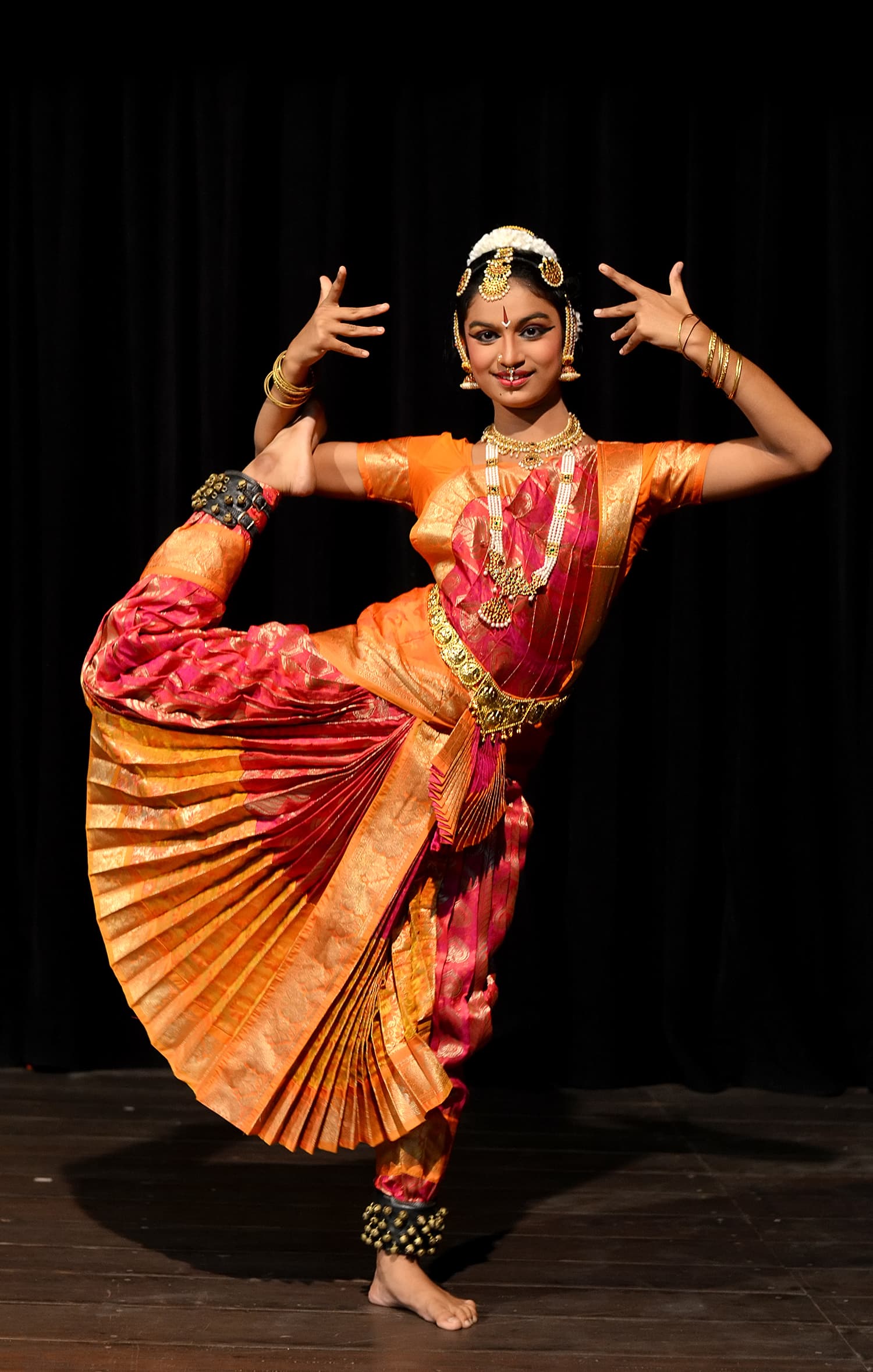
The oldest classical dance tradition of India — a temple-origin dance from Tamil Nadu, expressed in fixed upper torso, bent knees, intricate footwork and a vocabulary of hand-gestures (mudras).
Understand
Where Bharatanatyam comes from
Bharatanatyam (formerly Sadiraattam, renamed in 1932) is the oldest classical dance tradition of India, with descriptions of its precursors in the Natya Shastra dating from around 500 BCE to 500 CE and detailed accounts in the ancient Tamil epic Silappatikaram (c. 171 CE). Temple sculptures from the 6th to 9th centuries CE show that dance was a refined performance art by the mid-first millennium CE. Sadiraattam remained exclusive to Tamil Hindu temples through the 19th century, performed by devadasi women dedicated to the temple. After the colonial anti-dance movement and the 1947 Independence, the form was revived outside the temple by pioneers including Rukmini Devi Arundale and T. Balasaraswati, and was recognised as a classical dance by the Sangeet Natak Akademi. Today Bharatanatyam is one of the most widely performed classical dances in India and across the global Indian diaspora.
How it's practiced
Bharatanatyam is performed solo by a single dancer who does not leave the stage or change costume. The dance is noted for its fixed upper torso, bent legs, and the aramandi posture (a half-sitting stance with feet turned outward), combined with intricate footwork and a vocabulary of sign language based on hand, eye and facial-muscle gestures (the hastamudras). A typical two-hour programme is divided into alarippu, jatiswaram, varnam, padams and tillana — moving from invocation through pure dance to expressive abhinaya and rhythmic finale. The accompanying orchestra comprises the mridangam, veena, flute and a vocalist, with the dancer's guru present as the nattuvanar (conductor). Costume is the stitched sari-style temple dress with ankle bells and the traditional nose-stud and ornaments.
The oldest classical dance tradition of India — a temple-origin dance from Tamil Nadu, expressed in fixed upper torso, bent knees, intricate footwork and a vocabulary of hand-gestures (mudras).
From discovery to practice
The Journey
Experience it
Book the Bharatanatyam experience
Want to watch Bharatanatyam performed live? Tell us when and where you'd like to experience it, and we'll confirm the details.
Bring it to your event
Hire Bharatanatyam performers for your community, college or government event
Every performer WRIKSH connects you with has been personally verified. Tell us the occasion — a community celebration, a college festival, a government program — and we'll find the right group.
Discover further
More traditions of Tamil Nadu

Hire performers of Bharatanatyam for your event