
Performing Art · Mizoram
Cheraw (Bamboo Dance)
Mizo Cheraw
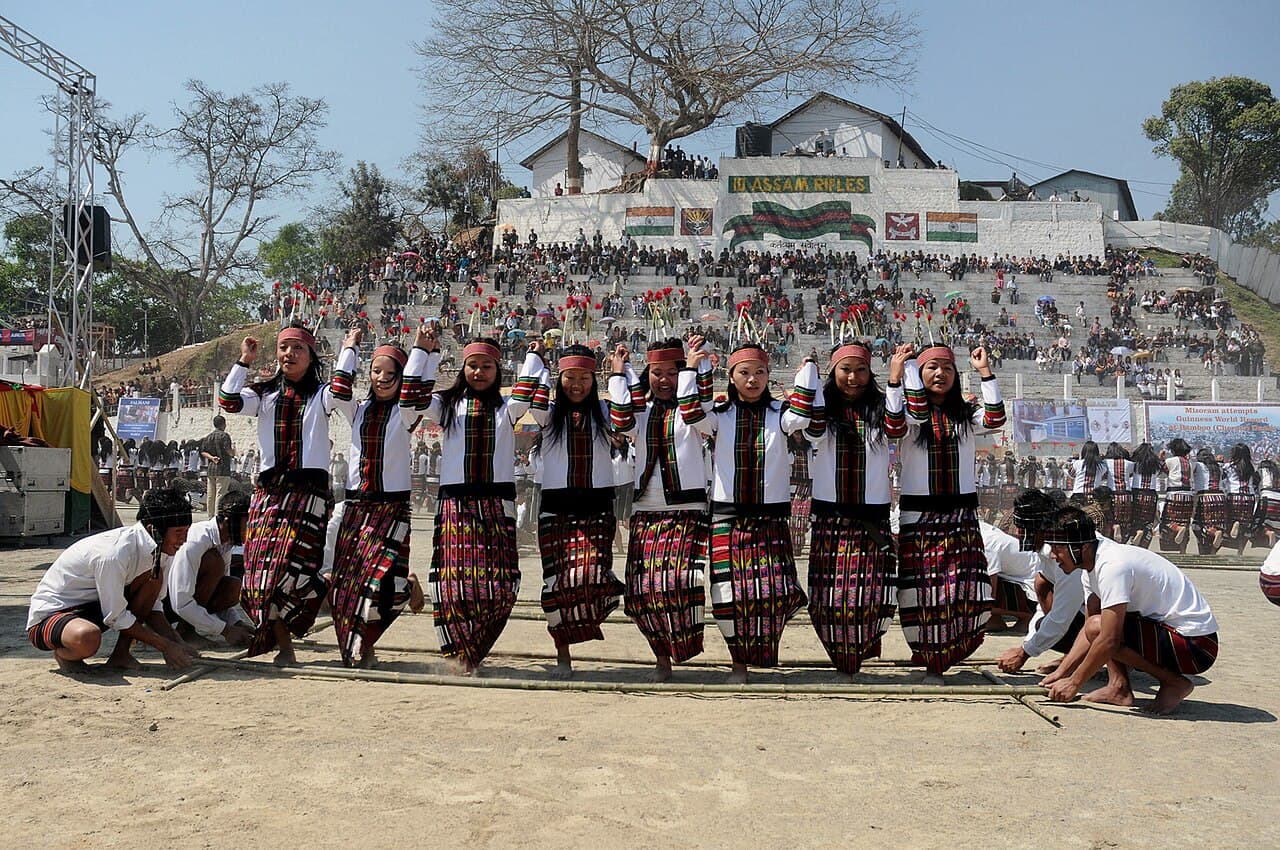
The traditional bamboo-stave dance of the Mizo people — performed by women stepping in and out of clashing bamboo poles held by men, with origins possibly dating to the 1st century CE.
Understand
Where Cheraw (Bamboo Dance) comes from
Cheraw is the traditional bamboo-dance of the Mizo (Lushai) people of Mizoram, considered one of the oldest known Mizo dances with origins possibly dating to the 1st century CE (during the era before the Kuki-Mizo migration into the Chin Hills and later into present-day Mizoram). The dance is performed at the Chapchar Kut (the central pre-harvest festival of the Mizo people) and at weddings and community gatherings of the Mizo. The dance was set a Guinness World Record in 2010, when over 10,736 dancers performed Cheraw in unison for eight minutes on a 3 km stretch in Aizawl. The dance is one of the most distinctive traditions of Mizoram and is regularly performed at the cultural programmes of the state and at the international cultural pageants of the Mizo diaspora.
How it's practiced
Cheraw is performed by men and women of the Mizo community, with the men (typically 4-8) seated facing each other and rhythmically tapping pairs of long bamboo staves on a horizontally-placed bamboo on the ground. The women dancers move in coordination with the bamboo rhythm — stepping in and out of the clashing poles, crossing over them and performing controlled hops, slides and glides. The choreography incorporates movements inspired by the swaying of trees and the flight of birds. The dance is accompanied by the traditional Mizo instruments — the khuang (drum), the darbu (gong) and the cymbals, with the bamboo poles generating the core rhythm. Modern versions sometimes include the accordion, mandolin and guitar. Costume is the distinctive Mizo dress — the vakiria (the female bamboo headdress decorated with feathers and beetle wings) and the kawrchei (the white-red-green-black blouse) for the women, and the khumbeu (the bamboo hat) and the Mizo shawl for the men.
The traditional bamboo-stave dance of the Mizo people — performed by women stepping in and out of clashing bamboo poles held by men, with origins possibly dating to the 1st century CE.
From discovery to practice
The Journey
Experience it
Book the Cheraw (Bamboo Dance) experience
Want to watch Cheraw (Bamboo Dance) performed live? Tell us when and where you'd like to experience it, and we'll confirm the details.
Bring it to your event
Hire Cheraw (Bamboo Dance) performers for your community, college or government event
Every performer WRIKSH connects you with has been personally verified. Tell us the occasion — a community celebration, a college festival, a government program — and we'll find the right group.
Discover further
More traditions of Mizoram

Hire performers of Cheraw (Bamboo Dance) for your event