
Performing Art · Himachal Pradesh
Kayang
कायांग
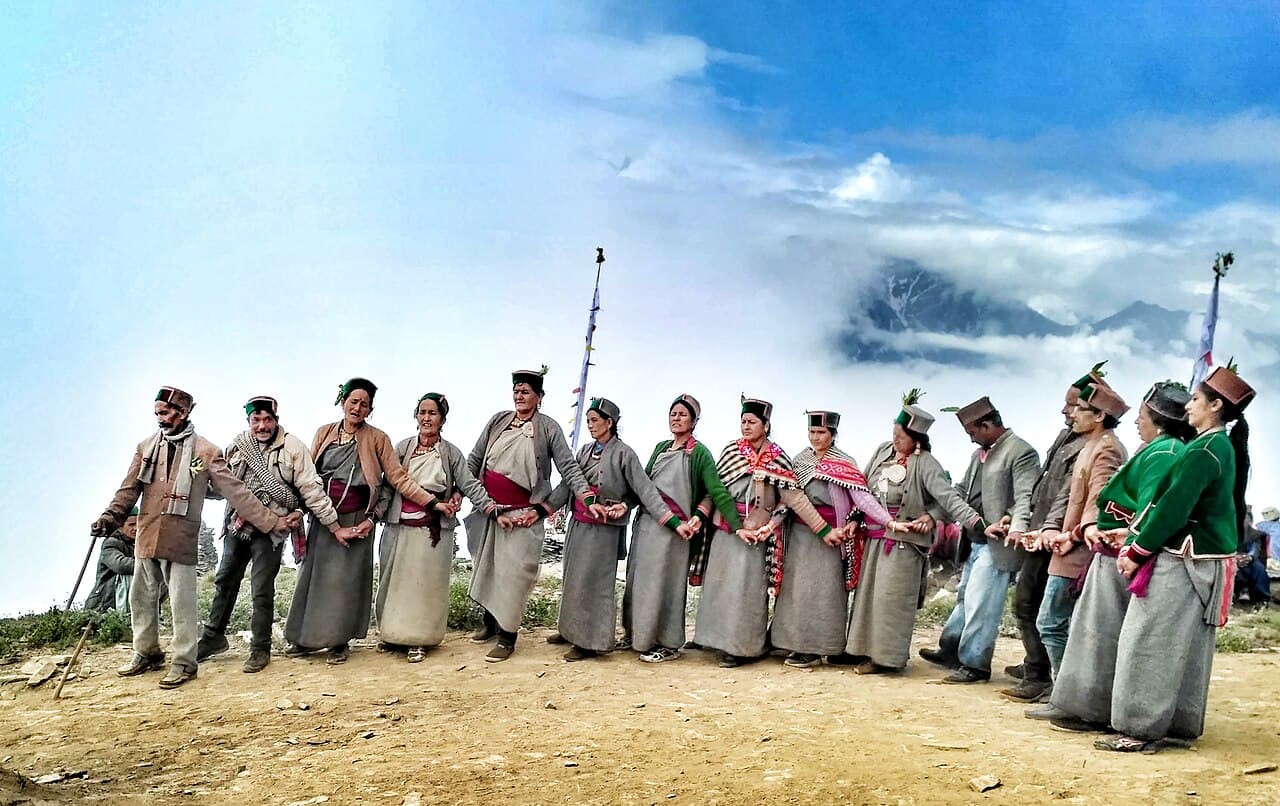
The women's folk-dance of the Lahaul-Spiti and Kinnaur regions of Himachal Pradesh — performed at the Buddhist festivals and at the harvest, with the women's small dance steps and the regional dhol-chang drum.
Understand
Where Kayang comes from
Kayang is the women's folk-dance of the Lahaul-Spiti and Kinnaur Buddhist communities of Himachal Pradesh, performed at the Buddhist festivals of the Lahaul region and at the harvest season of the high-altitude villages. The dance is associated with the Tibetan-Buddhist cultural heritage of the high Himalayas and is performed at the local festivals of the Lahaul, Spiti and Kinnaur valleys. The form is documented as one of the most distinctive regional traditions of the high-altitude communities of the state and is regularly performed at the cultural programmes of the Himachal Pradesh government. The dance shares the broad character of the Buddhist folk-dance traditions of the Himalayan region (the Tibetan folk-dance, the Kinnaur Shon dance) but with regional characteristics.
How it's practiced
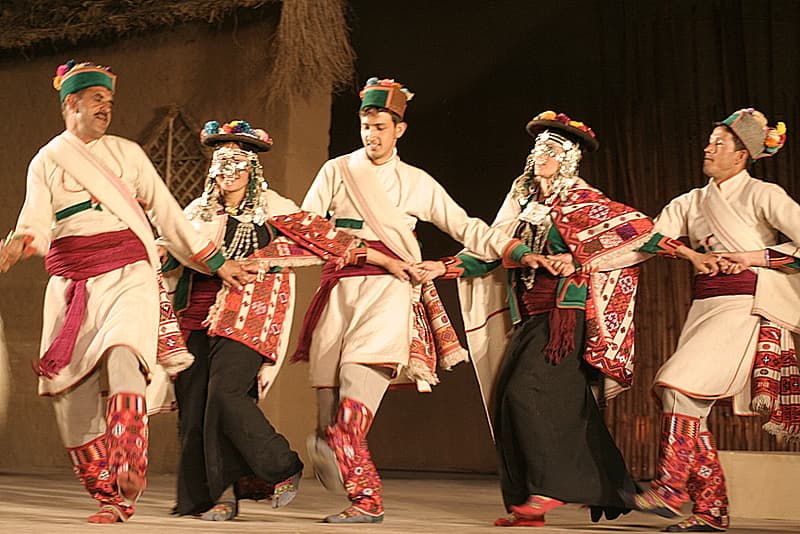
Kayang is performed by women of the Lahaul community in a circle at the central courtyard of the village or at the courtyard of the monastery (the gompa) at the festival. The women perform in small coordinated steps and sing the regional songs of the Lahaul tradition. The dance is gentle, with the women's small hand-gestures and the light clapping of the palms. Music is the dhol-chang (the double-headed drum of the high Himalayas) and the long horn (the ling-bu). Costume is the colourful Lahaul dress — the woollen-silk goncha and the colourful brocade-silk headdress of the women, with the heavy silver and turquoise jewellery of the Lahaul tradition. Performances are at the monastery courtyard and at the central village square of the Lahaul community.
The women's folk-dance of the Lahaul-Spiti and Kinnaur regions of Himachal Pradesh — performed at the Buddhist festivals and at the harvest, with the women's small dance steps and the regional dhol-chang drum.
From discovery to practice
The Journey
Experience it
Book the Kayang experience
Want to watch Kayang performed live? Tell us when and where you'd like to experience it, and we'll confirm the details.
Bring it to your event
Hire Kayang performers for your community, college or government event
Every performer WRIKSH connects you with has been personally verified. Tell us the occasion — a community celebration, a college festival, a government program — and we'll find the right group.
Discover further
More traditions of Himachal Pradesh

Hire performers of Kayang for your event