
Performing Art · Uttar Pradesh
Nautanki
नौटंकी
The folk opera-theatre tradition of northern India, particularly of Uttar Pradesh — a dance-and-song theatre of popular romantic, mythological and historical tales, performed in villages and towns.
Understand
Where Nautanki comes from
Nautanki is one of the most popular folk-performance traditions of the Indian subcontinent, particularly of northern India, with its roots in the older Saangit, Bhagat and Swang musical-theatre traditions of north India. The very name Nautanki derives from a single saangit titled 'Saangit Rani Nautanki Ka', which became so popular that the entire genre inherited its name. Nautanki is most associated with Uttar Pradesh (particularly the Awadh region), with parallel traditions in Rajasthan (Swang), Madhya Pradesh (Swang), Haryana and Bihar. Nautanki reached its peak under the patronage of the Nawabs of Awadh in the 18th and 19th centuries, and in the 19th century the form travelled with musicians and dramatists across northern India. Notable figures of modern Nautanki include Pandit Ram Dayal Sharma (recipient of the Padma Shri) and the scholar Dr Devendra Sharma who has worked to internationalise the form. Today Nautanki remains a living rural-theatre tradition of UP, with crowds of thousands gathering at the most popular performances.
How it's practiced
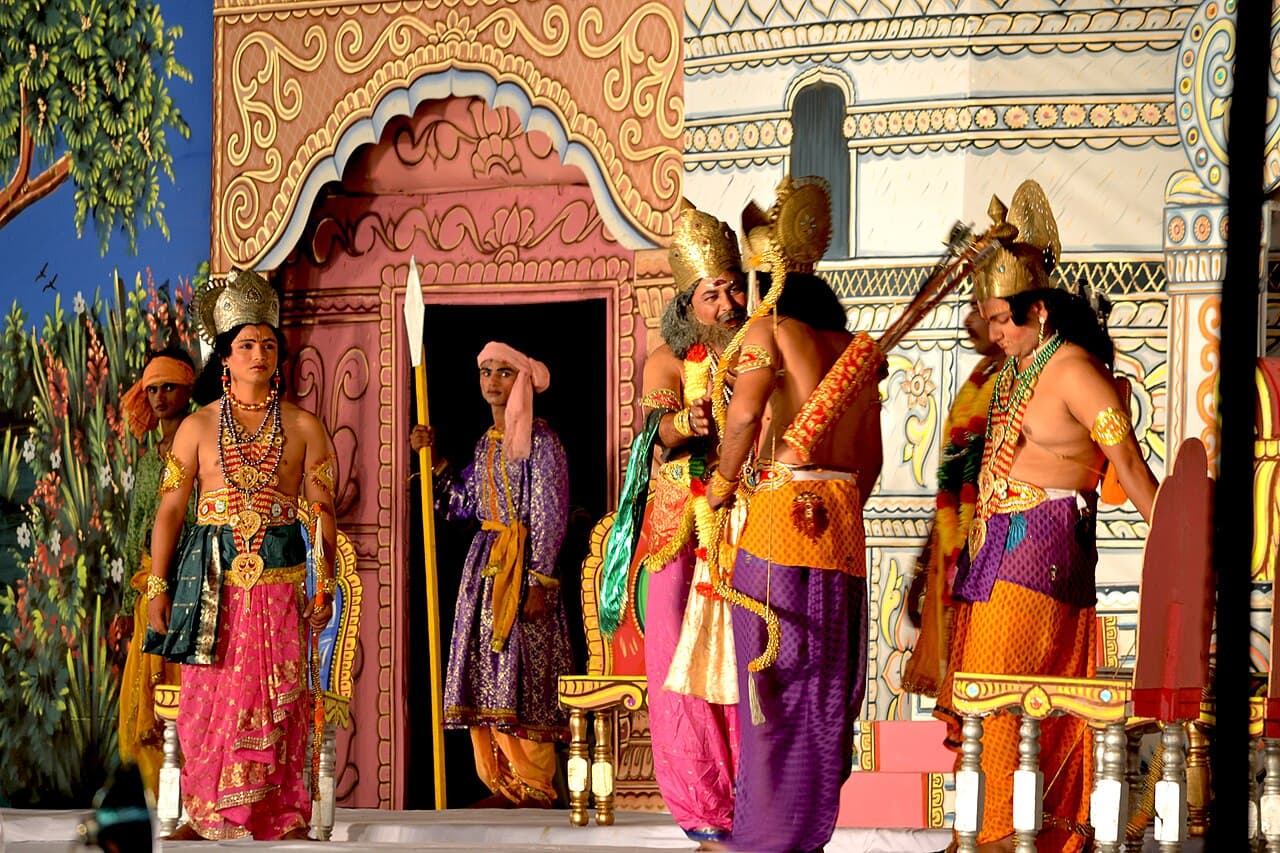
Nautanki is performed in any open ground available in or around a village — most often a chaupal (village community square) or a school playground. The stage is built up of wooden cots provided by the villagers, raised above the ground and lit at night by lanterns or petromax lamps (or by electric lights in modern performances). The performance is a sung drama of episodes drawn from romantic tales (Sultana Daku), mythologies (Shiv-Parvati, stories of Rama), or the biographies of local heroes (Amar Singh Rathore). The performance is interrupted by song-and-dance interludes and by comic-relief skits, with the audience actively participating — calling for encores and choosing the sequence of scenes. The orchestra is the harmonium, the dholak, the sarangi and the chorus-singers. Costume is the regional dress of the Nawabi-influenced UP theatrical tradition, with colourful turbans for the men and the ghagra-choli for the women playing the female roles.
The folk opera-theatre tradition of northern India, particularly of Uttar Pradesh — a dance-and-song theatre of popular romantic, mythological and historical tales, performed in villages and towns.
From discovery to practice
The Journey
Experience it
Book the Nautanki experience
Want to watch Nautanki performed live? Tell us when and where you'd like to experience it, and we'll confirm the details.
Bring it to your event
Hire Nautanki performers for your community, college or government event
Every performer WRIKSH connects you with has been personally verified. Tell us the occasion — a community celebration, a college festival, a government program — and we'll find the right group.
Discover further
More traditions of Uttar Pradesh

Hire performers of Nautanki for your event