
Performing Art · Odisha
Odissi
ଓଡ଼ିଶୀ
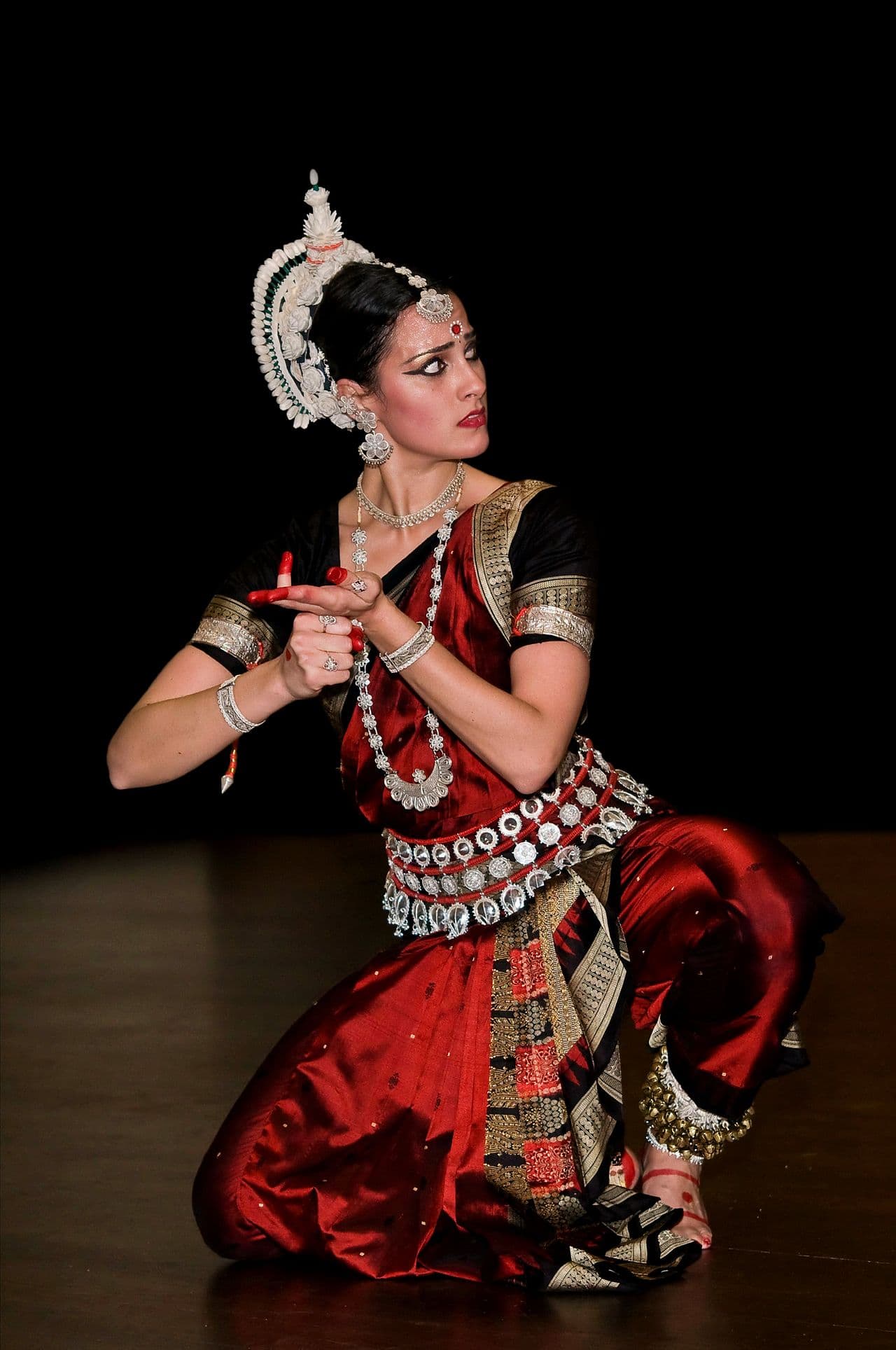
One of the eight classical dances of India — a temple-origin dance of Odisha distinguished by the tribhangi (three-bend) stance and sculpturesque grace, danced to Odissi music and the Odia language.
Understand
Where Odissi comes from
Odissi is an ancient classical dance of Odisha, with descriptions of its precursors in the Natya Shastra and in the Odia text of the Mahabharata by Sarala Dasa (14th century). The dance was traditionally performed by maharis (temple women dedicated to Jagannath of Puri) at the temple of Jagannath, and developed further at the courts of the Ganga, Surya and Bhanja dynasties. With the decline of the mahari tradition after the medieval period and under the colonial anti-nautch movement, Odissi moved into an extended period of decline, before its modern revival in the late 1940s and 1950s led by pioneers including Kavichandra Kalicharan Pattnaik, Mayadhar Raut and Pankaj Charan Das. In 2000, Odissi was declared a classical dance of India by the Sangeet Natak Akademi. Today Odissi has its centre at the Jayadev Bhavan and Odisha Dance Akademi in Bhubaneswar, with related forms of Gotipua and Mahari preserved alongside.
How it's practiced
Odissi is performed by soloists or duets, characterised by the tribhangi — the three-bend posture of head, torso and knee — and the chowk — a symmetrical square stance. The basic movements include the bhangis (body postures) of abhinaya, and the dance vocabulary distinguishes between the tandava (vigorous, masculine) and the lasya (graceful, feminine) idioms. Traditional repertoire includes the Mangalacharan (invocation), Batuka or Batu (a fast), Pallavi (a pure-dance piece), Abhinaya (an expressive-dance section) and the Mokshya (closing). Costume is the stitched Odissi-style sari in silver and the tasselled silver belt, with elaborate silver jewellery, and the classical makeup includes the typical Kohinoor-shaped eyes. Music is the Odissi package — the pakhoawayat of the Mardala, the bansuri, the violin and the manjira.
One of the eight classical dances of India — a temple-origin dance of Odisha distinguished by the tribhangi (three-bend) stance and sculpturesque grace, danced to Odissi music and the Odia language.
From discovery to practice
The Journey
Experience it
Book the Odissi experience
Want to watch Odissi performed live? Tell us when and where you'd like to experience it, and we'll confirm the details.
Bring it to your event
Hire Odissi performers for your community, college or government event
Every performer WRIKSH connects you with has been personally verified. Tell us the occasion — a community celebration, a college festival, a government program — and we'll find the right group.
Discover further
More traditions of Odisha

Hire performers of Odissi for your event