Performing Art · Telangana
Oggu Katha
ఒగ్గు కథ
The traditional folk-narrative-song-and-dance of the Golla and Kuruma communities of Telangana — performed in honour of the caste-deities Mallana, Beerappa and Yellamma with the Jaggu damarukam (a percussion instrument) and the gait of the Oggu performers.
Understand
Where Oggu Katha comes from
Oggu Katha (or Oggukatha) is the traditional folklore singing, praising and narrating the stories of the Hindu deities Mallana (also called Mallikarjuna), Beerappa and Yellamma of the Telugu-speaking region. The form originated among the Golla (Yadav) and Kuruma (Kuruba) communities of the Telangana region, who devoted themselves to the singing of the ballads in praise of Lord Shiva-Mallikarjuna. The Oggus are the traditional priests of the Golla and the Kuruma communities and perform the marriage of Mallana with Bhramaramba at the festival. The founder of the modern Oggu Katha tradition was Sri Vallam Pedda Veeraiah and the form was carried forward by his son Vishwa Vikyatha Oggu Katha Sarva Bhoumulu Vallam Sathaiah. Notable performers include Chukka Sattaiah, Kathala Mallaiah, Midde Ramulu and others. The Oggu Katha is regularly performed on Doordarshan (the Indian public TV) and on All India Radio in Telangana and is recognised as one of the most distinctive oral-narrative traditions of the state.
How it's practiced
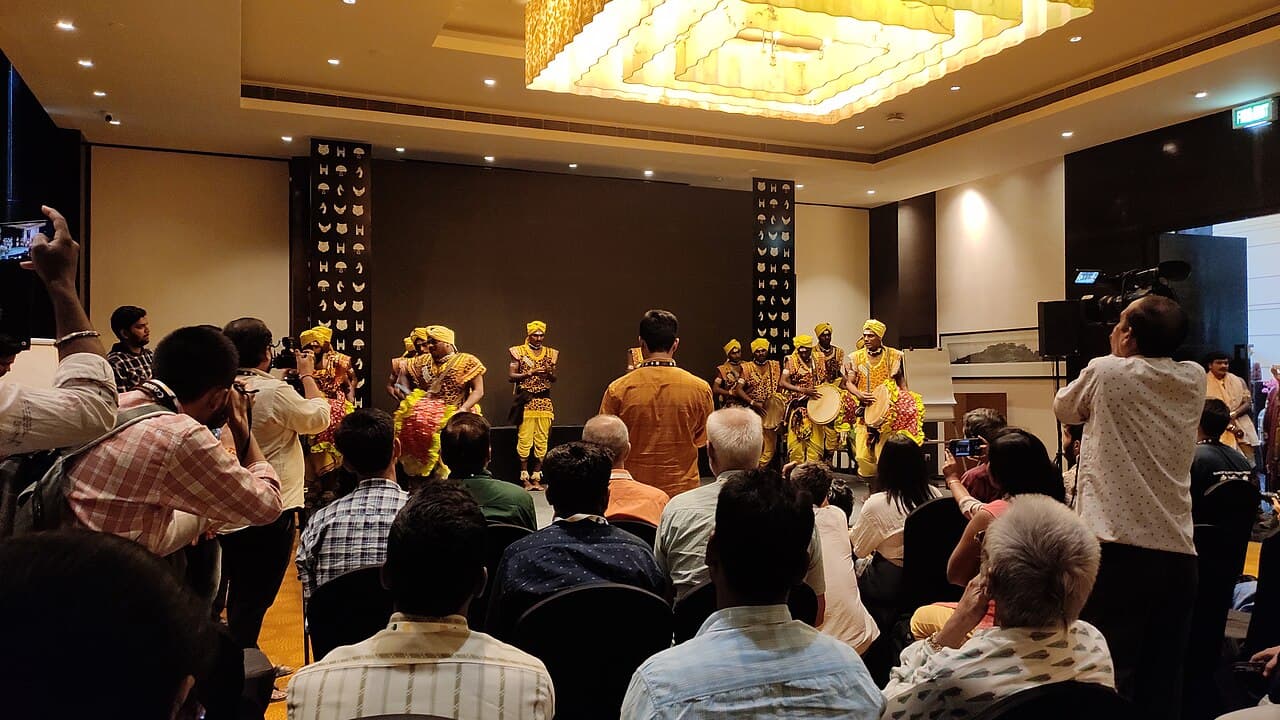
Oggu Katha is performed by a troupe of three men — the main narrator (kathakudu) and two co-performers (one called the hasyaka or joker, the other the rajakiya or politician). The narrator plays the Jaggu (a two-faced drum of the damarukam family) and wears a chain of seven shells (the gavvala darshanam) — the shells symbolising the seven brothers of Bhramaramba who were defeated by Mallana at the wedding of the goddess and then blessed to be the Oggus. The narrator sings the story of Mallana (or Beerappa, or Yellamma) and the dance includes rhythmic sequences of stamping and leaping to the beat of the Jaggu. The co-performers add jokes and satirical commentary, and the dance is performed at the village temple and at the marriage of Lord Mallana (the Mallana Bonalu). Costume is the traditional Golla-Kuruma dress — the dhoti and the kurta with the regional Yadav turban and the silver ornaments of the caste.
The traditional folk-narrative-song-and-dance of the Golla and Kuruma communities of Telangana — performed in honour of the caste-deities Mallana, Beerappa and Yellamma with the Jaggu damarukam (a percussion instrument) and the gait of the Oggu performers.
From discovery to practice
The Journey
Experience it
Book the Oggu Katha experience
Want to watch Oggu Katha performed live? Tell us when and where you'd like to experience it, and we'll confirm the details.
Bring it to your event
Hire Oggu Katha performers for your community, college or government event
Every performer WRIKSH connects you with has been personally verified. Tell us the occasion — a community celebration, a college festival, a government program — and we'll find the right group.
Discover further
More traditions of Telangana

Hire performers of Oggu Katha for your event