
Performing Art · Jharkhand
Jhumar (Jhumair)
झूमर
The central folk-dance of the Sadan and other Adivasi communities of the Chota Nagpur plateau — performed at the harvest and at the Karma festival in a circle of dancers stepping in coordinated rhythm to the dhol and bansuri.
Understand
Where Jhumar (Jhumair) comes from
Jhumar (also spelled Jhumur or Jhumair) is the central folk-dance tradition of the Sadan community of the Chota Nagpur plateau — the Adivasi cultural heartland of Jharkhand. Jhumar is performed by the Sadan (Indo-Aryan Adivasi groups of Chota Nagpur) and adopted by the broader Munda, Oraon and other tribal communities of the region. The dance is mainly performed at the harvest season and at the Karma festival, and is one of the most documented Adivasi dance traditions of central India. The Jhumar has regional variants including Khortha Jhumar (of the Khortha region of Jharkhand), Kurmali Jhumar, Panch Pargarnia Jhumar, Nagpuri Jhumar, Mardani Jhumar and Janani Jhumar. The dance has been documented in detail by the scholar Manik Lal Sinha in the Sangeet Natak Akademi's 'Jhumar of the West Bengal highlands' (1974). The Sangeet Natak Akademi has recognised Jhumar as a distinctive folk-dance tradition. Notable recent performers include Govind Sharan Lohra and Mukund Nayak.
How it's practiced
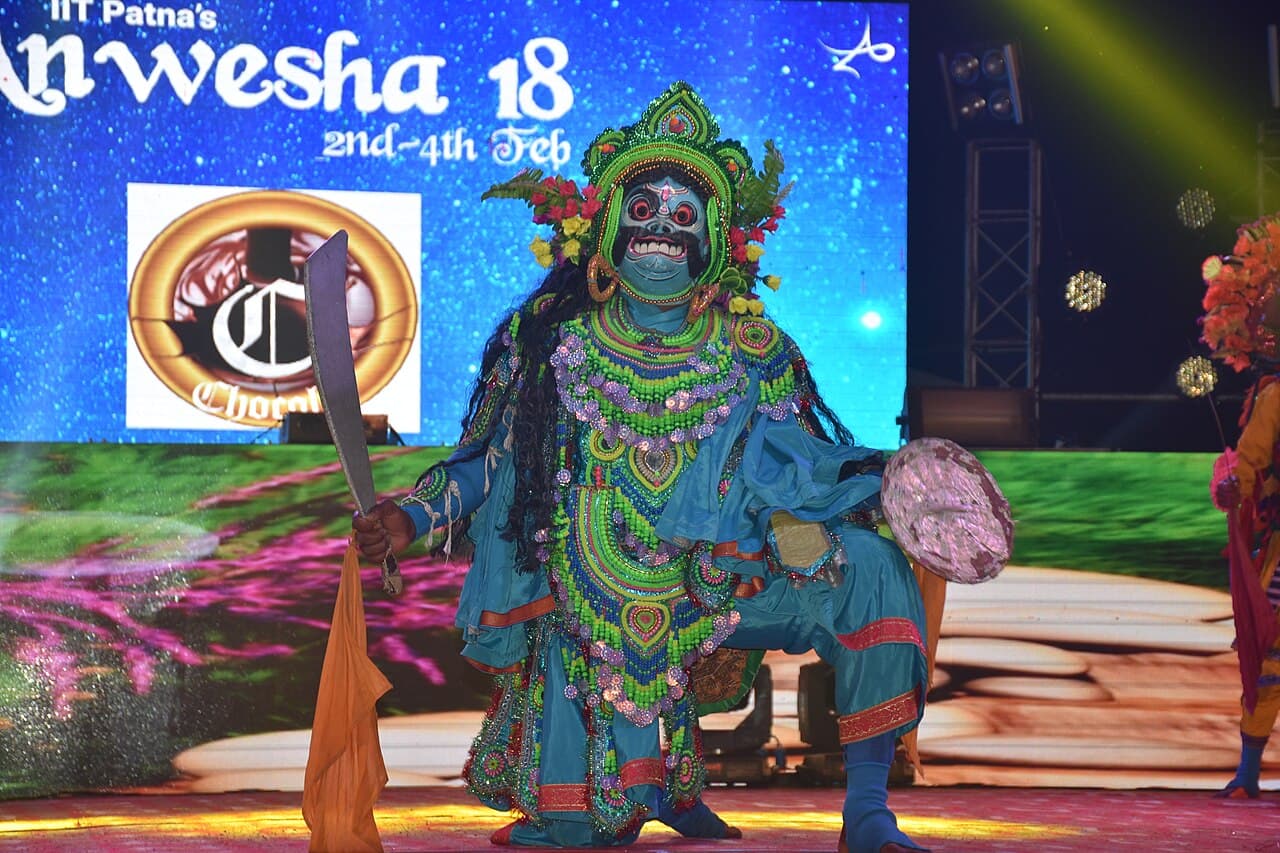
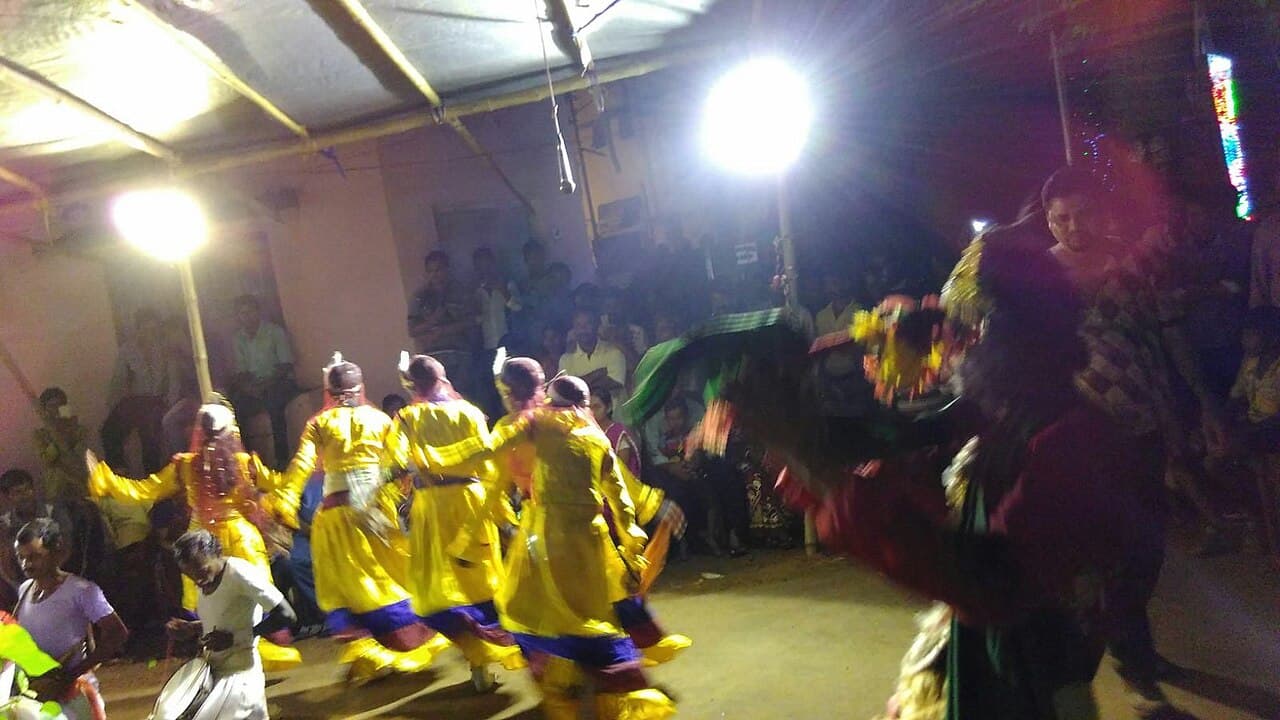
Jhumar is performed by men and women in a row, holding hands and stepping in coordinated patterns while singing couplets. The dance features swaying of the body and of the arms, with timed jumps at particular points. The accompanying instruments are the mandar (a barrel drum), the dhol, the nagara (a kettle-drum) and the bansuri (bamboo flute). The tempo is moderate-to-lively, and the dance is performed at the harvest and at the Karma festival by the Sadan and other tribal communities of Jharkhand. The dance is accompanied by the singing of the Sadan ballads in the Sadri dialect of the region. Costume is the everyday Adivasi dress of Jharkhand — the dhoti and kurta for men and the colourful sari with the heavy silver jewellery for the women.
The central folk-dance of the Sadan and other Adivasi communities of the Chota Nagpur plateau — performed at the harvest and at the Karma festival in a circle of dancers stepping in coordinated rhythm to the dhol and bansuri.
From discovery to practice
The Journey
Experience it
Book the Jhumar (Jhumair) experience
Want to watch Jhumar (Jhumair) performed live? Tell us when and where you'd like to experience it, and we'll confirm the details.
Bring it to your event
Hire Jhumar (Jhumair) performers for your community, college or government event
Every performer WRIKSH connects you with has been personally verified. Tell us the occasion — a community celebration, a college festival, a government program — and we'll find the right group.
Discover further
More traditions of Jharkhand
Hire performers of Jhumar (Jhumair) for your event