
Performing Art · Tamil Nadu
Therukoothu
தெருக்கூத்து
The Tamil street-theatre folk form — open-air dramatic dances on themes from the Ramayana, Mahabharata and Puranas, performed at village festivals.
Understand
Where Therukoothu comes from
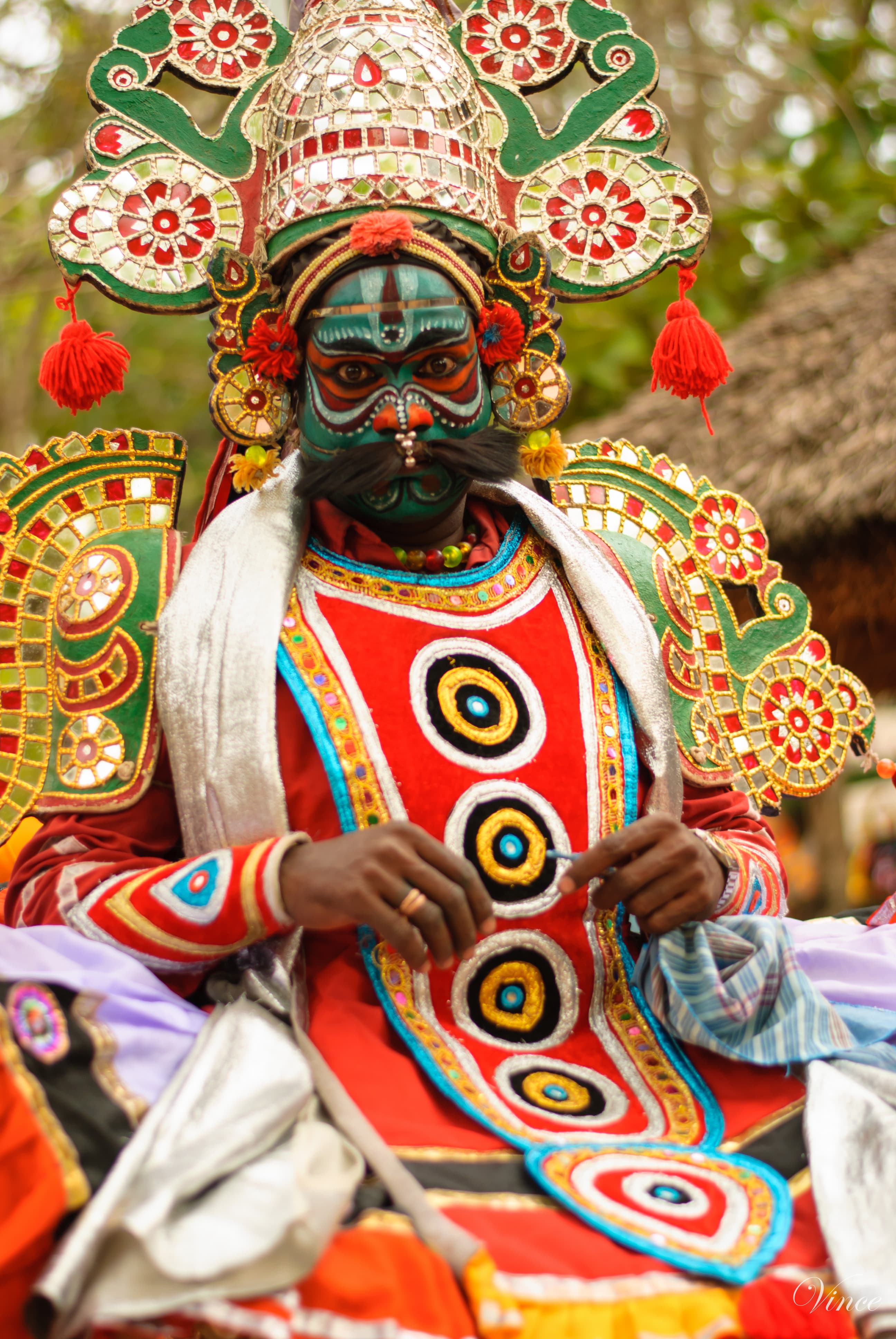
Therukoothu (literally 'street play' — from teru 'street' + koothu 'play') is an ancient Tamil art form where artists enact scenes from Hindu epics and folklore with dance and music. The Sangam literature, including the Silappatikaram, provides detailed descriptions of the form, indicating its ancient roots. The tradition combines play performance with narration and singing, and is usually dedicated to Hindu goddesses such as Mariamman or Draupadi. Therukoothu is performed mainly by the communities of northern Tamil Nadu, with two main variants — Terukuttu (mobile, in procession) and Kattaikkuttu (stationary, overnight). The form is closely related to Chakyar Koothu of Kerala and to the street-theatre traditions across south India.
How it's practiced
Therukoothu is performed in open village or temple spaces — the performer (or troupe) takes the centre of an open ground, the audience sits around in a circle, and the show begins after darkfall. Performers wear elaborate wooden headgear, swirling skirts, heavy anklets and prominent face-paint and make-up reminiscent of Bharatanatyam-meets-street-theatre aesthetics. The play is introduced and narrated by a kattiyakaran (the sutradhar-clown), with songs by a backing vocalist and accompaniment on the mridangam and cymbals. Traditionally performed by men (with women in the cast being played by men), modern productions have included female performers. Stories are drawn from the Ramayana, Mahabharata and Puranas, with the dance portions particularly evident in fight scenes and in character entrances.
The Tamil street-theatre folk form — open-air dramatic dances on themes from the Ramayana, Mahabharata and Puranas, performed at village festivals.
From discovery to practice
The Journey
Experience it
Book the Therukoothu experience
Want to watch Therukoothu performed live? Tell us when and where you'd like to experience it, and we'll confirm the details.
Bring it to your event
Hire Therukoothu performers for your community, college or government event
Every performer WRIKSH connects you with has been personally verified. Tell us the occasion — a community celebration, a college festival, a government program — and we'll find the right group.
Discover further
More traditions of Tamil Nadu
Hire performers of Therukoothu for your event