
Stories of India
19 October 2026 · 2 min read
Seven States, One Tree
Why WRIKSH sees India's regions not as separate destinations, but as branches of the same root system.
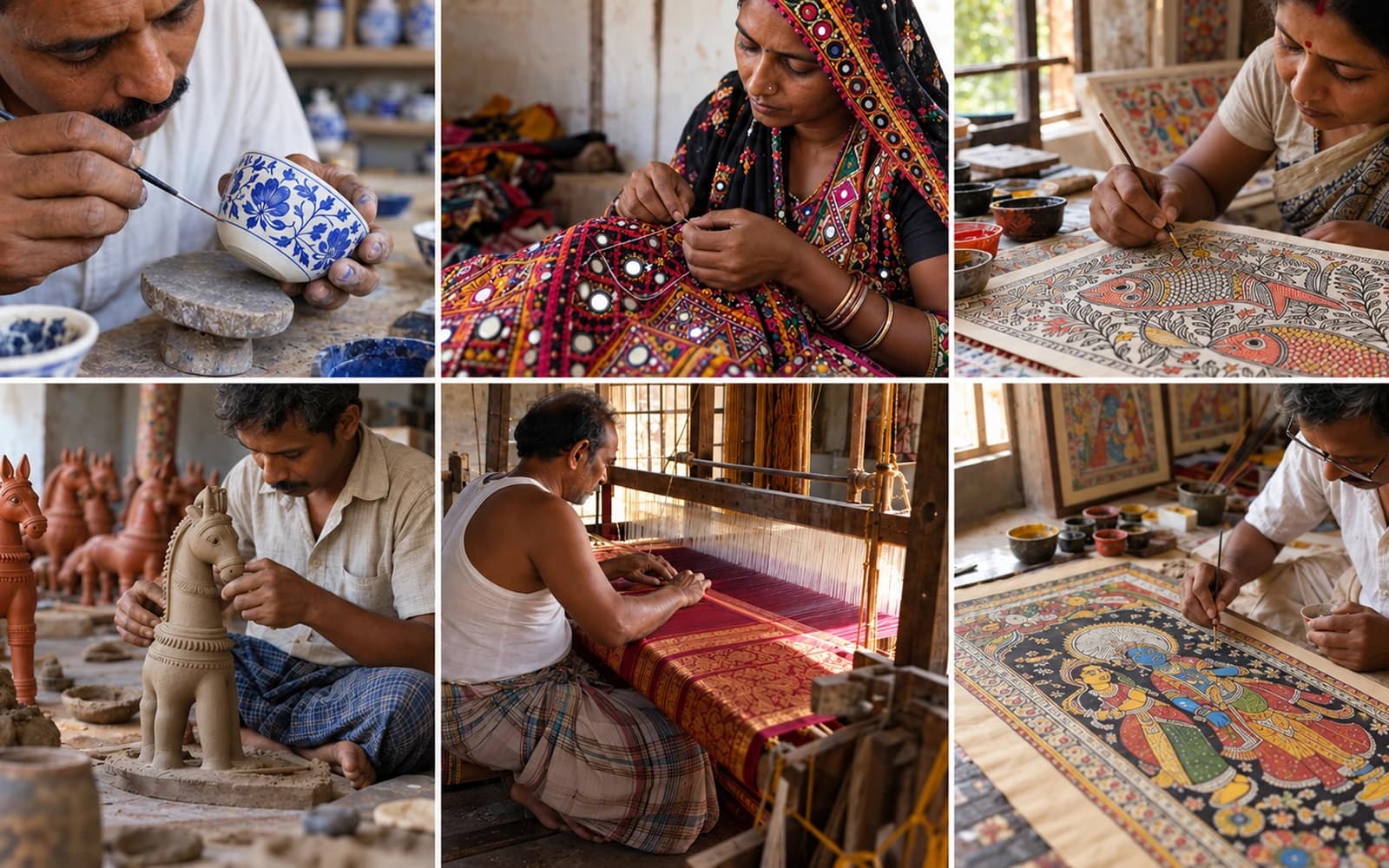
Every state we work in tells a slightly different story — a different craft, a different rhythm, a different relationship to land and ritual. The materials change. The gestures change. Even the meaning of gathering together takes a different shape.
Yet beneath these differences, we keep returning to a shared thread: practices that bring people together, carry memory, and give expression to everyday life.
A finished artwork can catch our attention in a moment. Understanding what keeps it alive asks us to stay a little longer. Behind the object or movement is someone who has returned to it repeatedly — learning, making mistakes, refining a gesture, finding meaning through practice. There are teachers, families, places, and relationships woven into what we see.
That is the idea behind the tree at the centre of WRIKSH.
The canopy is wide and varied — Kalaripayattu in Kerala, Warli painting in Maharashtra, Bandhani in Gujarat. Each branch deserves to be understood on its own terms, with its own history and the people who give it life. Their connection lies in the act of carrying something forward: knowledge received, practised, and placed in another person’s hands.
We are drawn to that moment of sharing.
It might begin with watching a practitioner work. Then comes an invitation: hold the material, try the movement, make the first mark. Something that seemed distant becomes an experience within your own body. You begin to notice the attention behind a simple gesture, the patience within a pattern, the years contained in an apparently effortless movement.
You may leave with a small creation. You may also leave with a different way of seeing.
This is what we want a WRIKSH experience to make possible: an opportunity to see beauty, feel it within yourself, and give it expression. A first encounter can open a door to curiosity, and curiosity can become a reason to return, learn more, and build a relationship with a practice and its people.
For us, connecting seven states carries a responsibility to give each branch room to grow. That means listening to practitioners, respecting how they wish to share their knowledge, and creating opportunities that make their continued work worthwhile.
A living tree keeps growing through what its roots nourish and what its branches reach towards. We see culture in a similar way: rooted in what has been carried forward, open to the people who will participate in it next.
We built WRIKSH to offer a way into that living connection.
Somewhere between watching a hand at work and making your own first attempt, you begin to find your place in the story.