
Performing Art · Assam
Bihu
বিহু
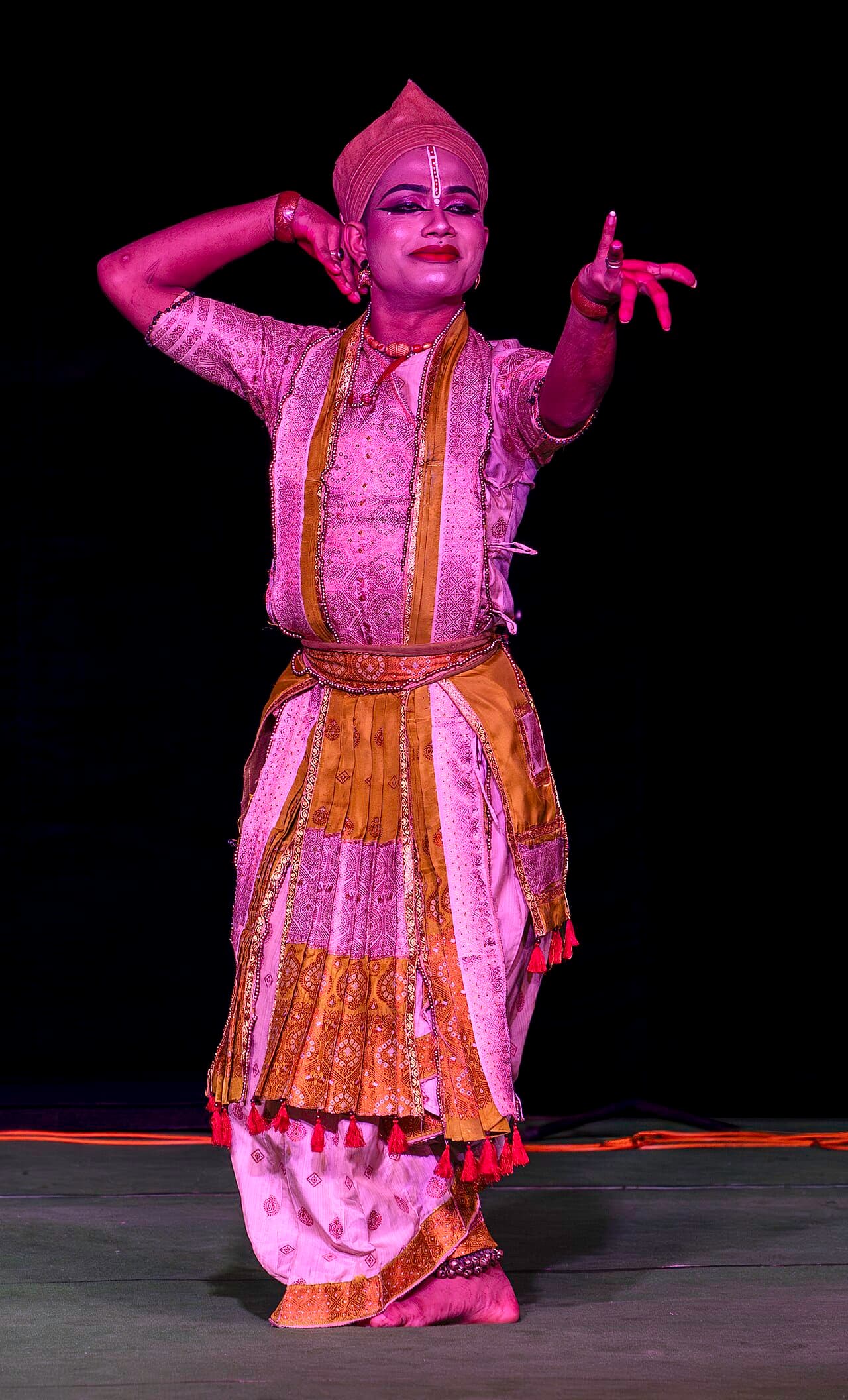
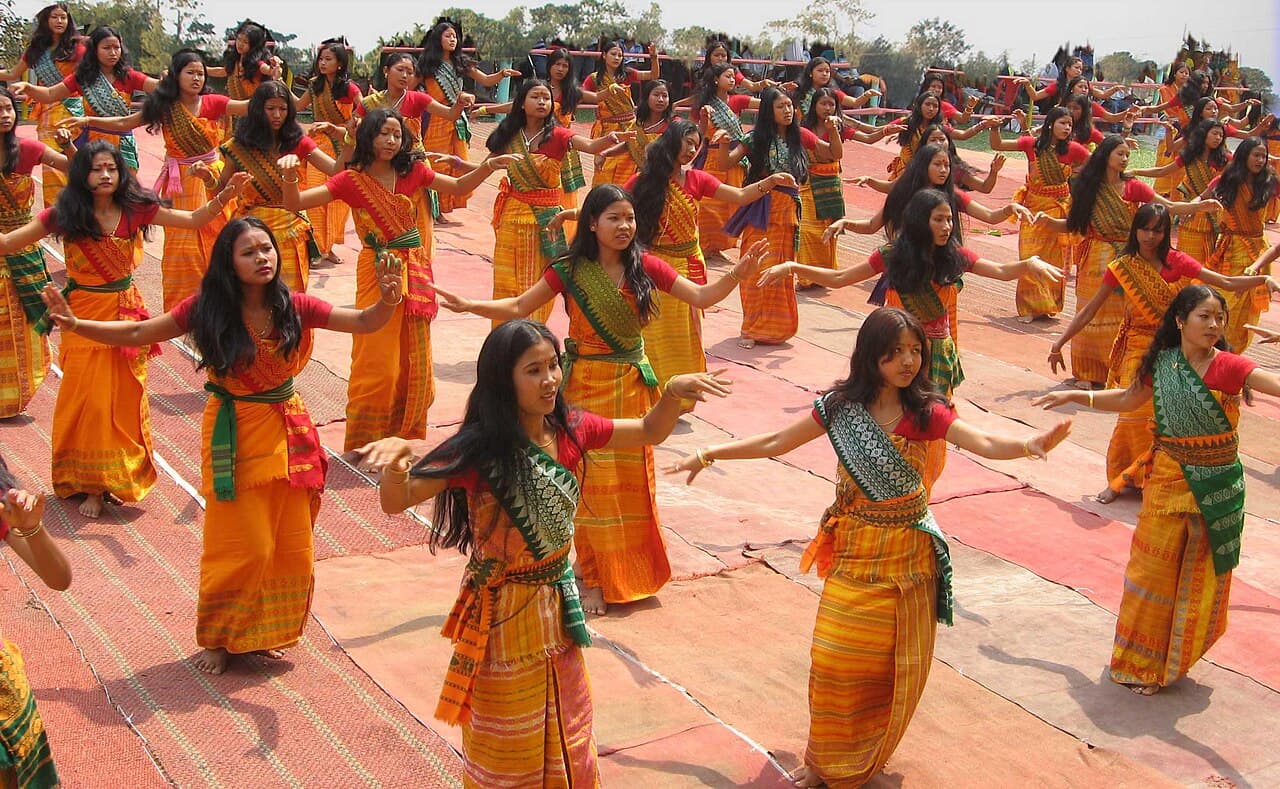
The signature folk-dance of Assam — performed at the Bohag/Rongali Bihu (spring) and Kati/Confu Bihu (autumn) festivals, with the characteristic hip-sway and outstretched hand-gestures of the Assamese people.
Understand
Where Bihu comes from
Bihu is the indigenous Assamese folk-dance and song-form, performed across the state at the three Bihu festivals of the Assamese agricultural calendar — the Bohag Bihu (or Rongali Bihu) in April-May, the Kati Bihu (or Kongali Bihu) in October and the Magh Bihu (or Bhogali Bihu) in January. The festival is anchored on the agricultural cycle of the rice-growing Brahmaputra valley and is celebrated by the indigenous communities of the region — Assamese, Ahom, Koch-Rajbongshi, Sonowal-Kachari and the tea-tribe Adivasi communities. Bihu is closely associated with the sung Bihu-geet tradition and with the Bihu drum (the dhol), the flute (the pepa) and the dancers' characteristic hand-and-hip movement. The form is one of the most defining identity markers of the Assamese people and is regularly performed at the state cultural pageants and international Assamese diaspora events.
How it's practiced
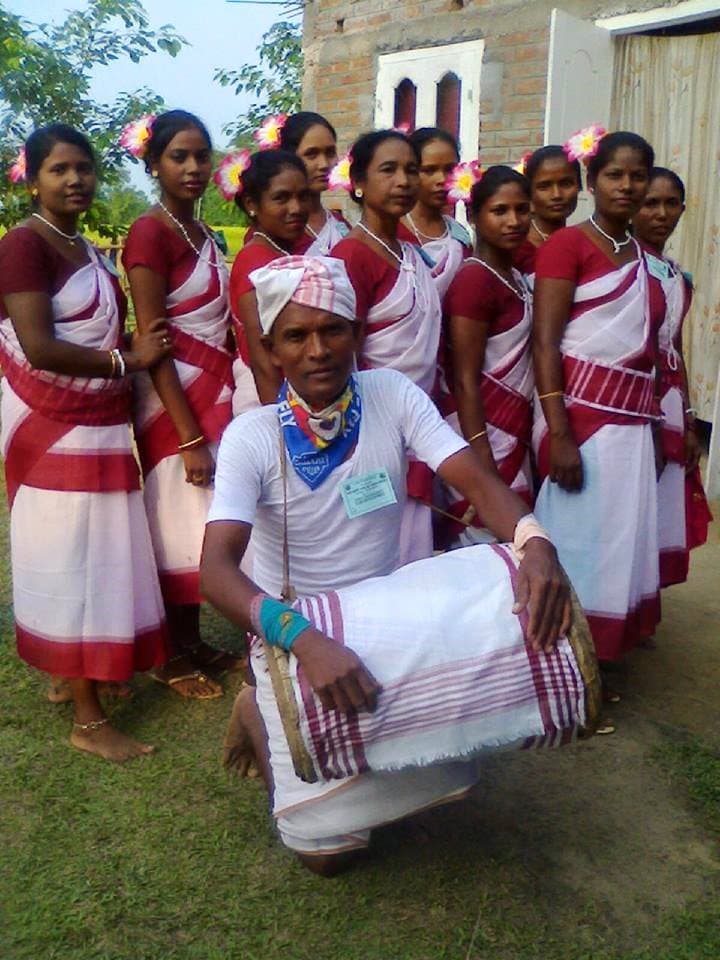
Bihu is performed by men and women (or by mixed groups) in an open space — at the village square, at a riverside meadow or in front of a community hall. The dancers stand in a loose circle or line and move with their palms outstretched and turned upwards (the distinctive 'Maati aakhar' / 'soft-step' of Bihu), swaying the hips gently while stepping to the beat of the dhol. The accompanying songs are the Bihugeet — vernacular Assamese songs of spring, love, courtship, agriculture and the new harvest. Music is the dhol (the Bihu drum), the pepa (a buffalo-horn or cow-horn trumpet), the taal (a small cymbal), the flute and the gogona (a bamboo clapper). Costume is the traditional Assamese dress — the women's mekhela chador (a two-piece sari) and the men's dhoti and gamosa (towel).
The signature folk-dance of Assam — performed at the Bohag/Rongali Bihu (spring) and Kati/Confu Bihu (autumn) festivals, with the characteristic hip-sway and outstretched hand-gestures of the Assamese people.
From discovery to practice
The Journey
Experience it
Book the Bihu experience
Want to watch Bihu performed live? Tell us when and where you'd like to experience it, and we'll confirm the details.
Bring it to your event
Hire Bihu performers for your community, college or government event
Every performer WRIKSH connects you with has been personally verified. Tell us the occasion — a community celebration, a college festival, a government program — and we'll find the right group.
Discover further
More traditions of Assam
Hire performers of Bihu for your event