
Performing Art · Assam
Jhumur
ঝুমুৰ
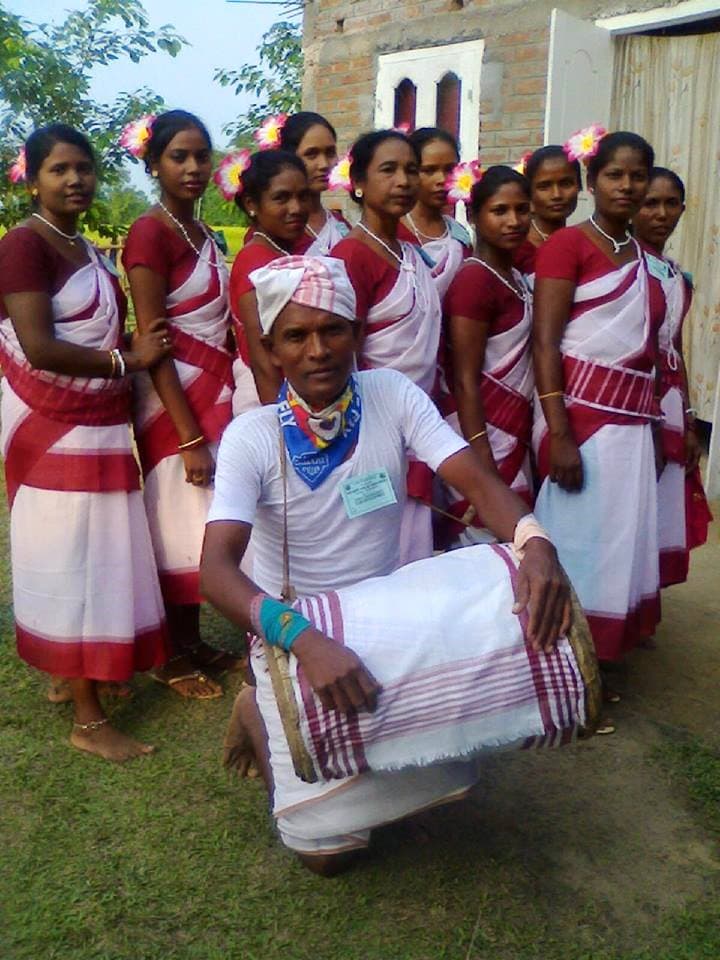
The tea-tribe Adivasi folk-dance of Assam — performed by the Adivasi tea-garden communities of the Brahmaputra valley in a circle with singing and clapping, particularly at Bihu and the Adivasi harvest festivals.
Understand
Where Jhumur comes from
Jhumur (also Jhumar / Jhumair) is a folk-dance tradition of the Adivasi communities of eastern and central India — including the tea-garden tribal communities of Assam (the tea-tribes of the Brahmaputra valley, brought from the Chota Nagpur plateau and central India during the British tea-plantation era). The form has its origins in the Chota Nagpur Sadan / Oraon communities but has been adopted by the Adivasi tea-garden communities of Assam over more than a century. Jhumur is performed at the Rongali Bihu (the spring), at the harvest festivals, at Christmas gatherings of the Adivasi tea-garden communities and at the cultural programmes of contemporary Assam. The dance has become one of the most recognised Adivasi-identity markers of the tea-garden belt of the Brahmaputra valley and is closely related to the same Jhumar / Jhumur dance tradition of Jharkhand and the wider central-Indian Adivasi belt.
How it's practiced
Jhumur is performed by men and women in a circle, with the dancers holding hands and stepping in coordinated patterns to the heavy rhythm of the dhol, the mandar and the nagara. The women wear the colourful sari and the men wear the dhoti-kurta, with both teams stepping in time to the lead singer of the Jhumar songs. The dance features the characteristic stylized jumps and turns of the tradition, with the dancers rocking in place and moving around the circle. Costume is the regional Adivasi dress — the women's colourful sari (often with the magenta and yellow colours of the tea-garden communities) and the men's dhoti-kurta, with heavy silver jewellery of the Adivasi tradition.
The tea-tribe Adivasi folk-dance of Assam — performed by the Adivasi tea-garden communities of the Brahmaputra valley in a circle with singing and clapping, particularly at Bihu and the Adivasi harvest festivals.
From discovery to practice
The Journey
Experience it
Book the Jhumur experience
Want to watch Jhumur performed live? Tell us when and where you'd like to experience it, and we'll confirm the details.
Bring it to your event
Hire Jhumur performers for your community, college or government event
Every performer WRIKSH connects you with has been personally verified. Tell us the occasion — a community celebration, a college festival, a government program — and we'll find the right group.

Hire performers of Jhumur for your event