
Performing Art · Gujarat
Garba
ગરબા
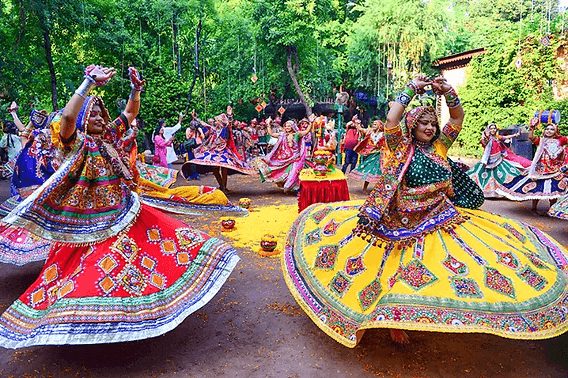
The circular devotional dance of Gujarat, performed during the nine nights of Navaratri in honour of the goddess Amba / Durga.
Understand
Where Garba comes from
Garba is a Gujarati folk dance whose name derives from the Sanskrit garbha (womb), and the dance is understood as a celebration of gestation, life and the feminine shakti. It is performed during the Hindu festival of Navaratri in honour of Amba Mata, an incarnation of goddess Durga, and is traditionally staged around a clay pot lit from within (a garbo) or an image of the goddess. In December 2023 UNESCO inscribed Garba of Gujarat on its Representative List of the Intangible Cultural Heritage of Humanity. Folk dances of Gujarat more broadly are frequently performed to mark the first menstrual cycle or a marriage, reflecting the dance's deep association with fertility and womanhood.
How it's practiced
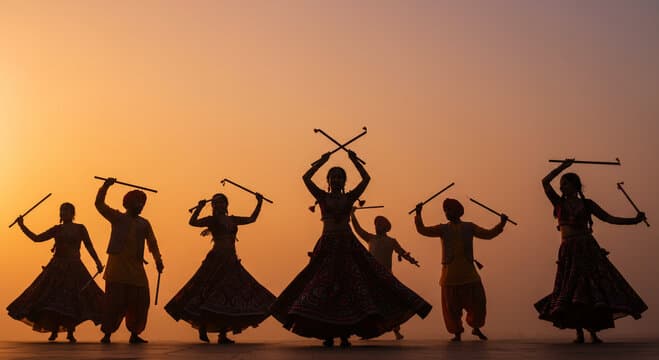
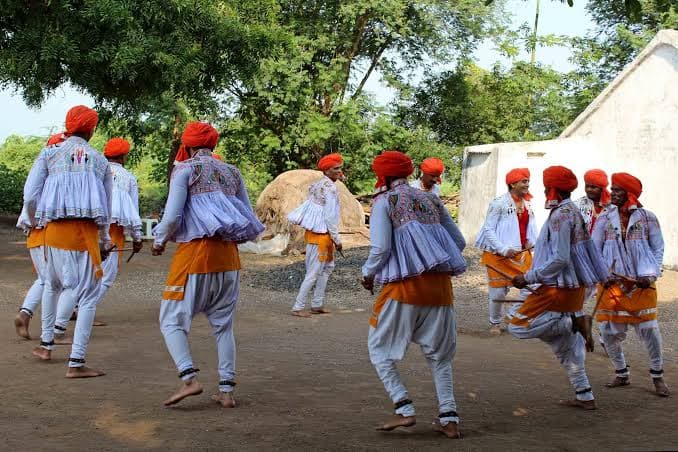
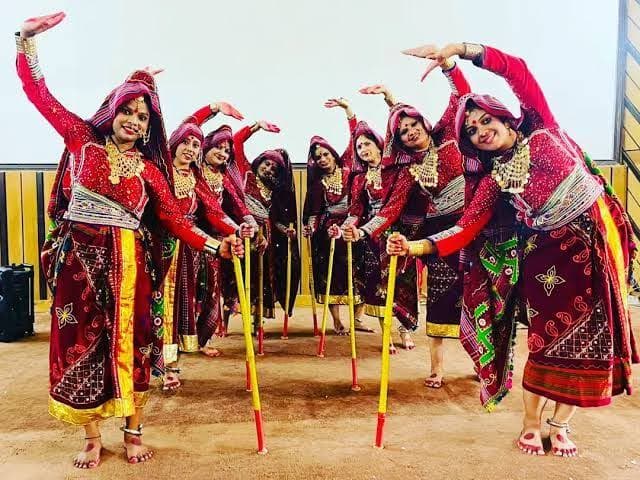
Garba is performed in concentric circles — sometimes single, sometimes multiple rings moving in opposite directions — and is traditionally a counterclockwise circle dance whose tempo builds across the night. The traditional music is dhol, dholak, cymbals and shehnai; the typical Gujarati costume is chaniya choli (a flared, mirror-worked ghagra with blouse and dupatta) for women and kediyu for men. Clapping on the down-beat is the defining rhythmic gesture; sticks are not used in garba itself but are taken up in the sibling form, Dandiya Raas, which usually closes the night.
The circular devotional dance of Gujarat, performed during the nine nights of Navaratri in honour of the goddess Amba / Durga.
From discovery to practice
The Journey
Experience it
Book the Garba experience
Want to watch Garba performed live? Tell us when and where you'd like to experience it, and we'll confirm the details.
Bring it to your event
Hire Garba performers for your community, college or government event
Every performer WRIKSH connects you with has been personally verified. Tell us the occasion — a community celebration, a college festival, a government program — and we'll find the right group.
Discover further
More traditions of Gujarat
Hire performers of Garba for your event