
Performing Art · Nagaland
Hornbill Festival Dance
Hornbill Festival
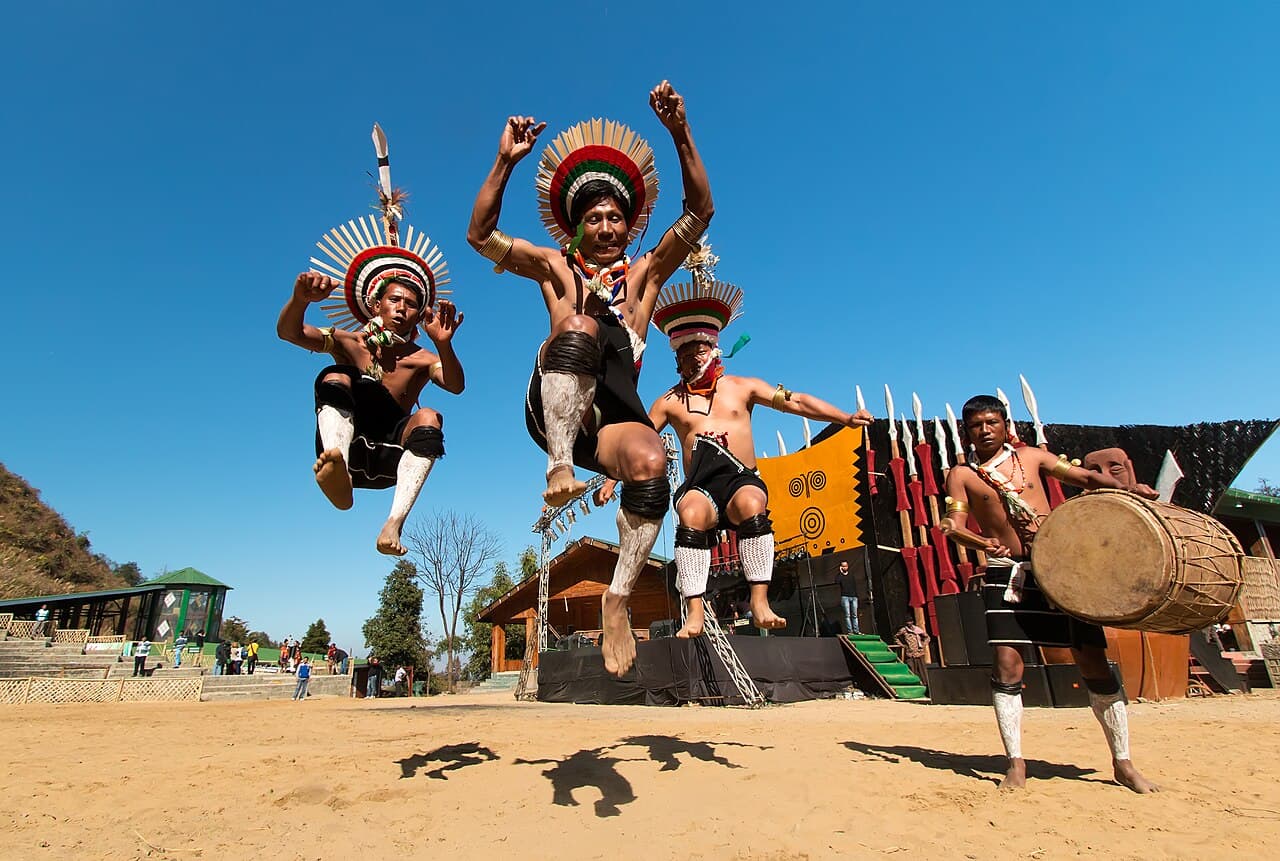
The composite Naga tribal dance-demonstration of the Hornbill Festival — performed by all 16 Naga tribes at the central Kisama heritage village near Kohima in December, showcasing the warrior-dance and folk-dance traditions of the Naga nation.
Understand
Where Hornbill Festival Dance comes from
The Hornbill Festival is the central cultural festival of Nagaland, celebrated annually in the first week of December at the Kisama heritage village near Kohima. The festival was started in 2000 by the Government of Nagaland as a showcase of the cultural heritage of the 16 major Naga tribes (Angami, Ao, Chakhesang, Konyak, Lotha, Sumi, Zeliang, Phom, Sangtam, Yimchungrü, Kuki, Mao, Maram, Pochury, Rongmei and Tangshul) and the neighbouring regions. The festival is named after the Indian hornbill (the bird central to the folklore of many Naga tribes) and features a week of dance, music, food and crafts of the Naga communities. The dance-demonstrations at the festival include all the major Naga dance forms (the war-dance, the bamboo-dance, the harvest-dance, the Likimro of the Konyak, the Sekrenyi of the Angami and the Moatsu of the Ao) and is one of the most prominent cultural festivals of the Northeast.
How it's practiced
The Hornbill Festival dance is performed by men and women of the 16 Naga tribes at the central heritage village of Kisama. The dance-demonstrations include the warrior-dance (with spear and shield), the bamboo-stave dance, the harvest-celebration dance and the regional folk-dance of each tribe. The dances are performed on the central stage of the festival and in the tribal-village replicas. Music is the regional instruments (the bamboo mouth-organ, the log-drum and the small cymbals). Costume is the traditional dress of each tribe (the lungi, the headdress with the hornbill-feather, the colourful shawl and the warrior-dress of the Konyak). Performances are at the central stage of the festival and at the cultural programmes of the state.
The composite Naga tribal dance-demonstration of the Hornbill Festival — performed by all 16 Naga tribes at the central Kisama heritage village near Kohima in December, showcasing the warrior-dance and folk-dance traditions of the Naga nation.
From discovery to practice
The Journey
Experience it
Book the Hornbill Festival Dance experience
Want to watch Hornbill Festival Dance performed live? Tell us when and where you'd like to experience it, and we'll confirm the details.
Bring it to your event
Hire Hornbill Festival Dance performers for your community, college or government event
Every performer WRIKSH connects you with has been personally verified. Tell us the occasion — a community celebration, a college festival, a government program — and we'll find the right group.
Discover further
More traditions of Nagaland


Hire performers of Hornbill Festival Dance for your event