
Performing Art · Assam
Khul (Khullana)
খুল
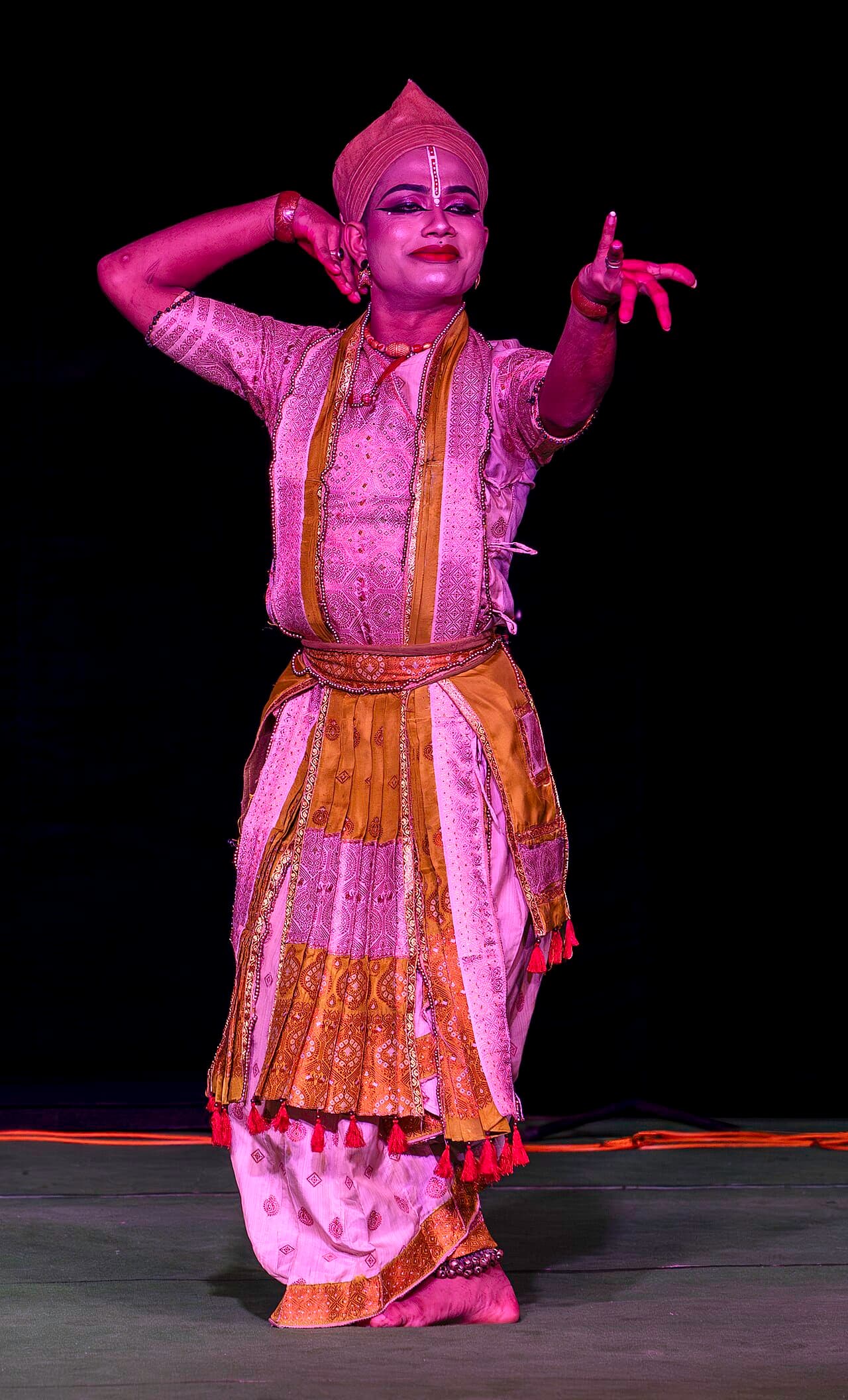
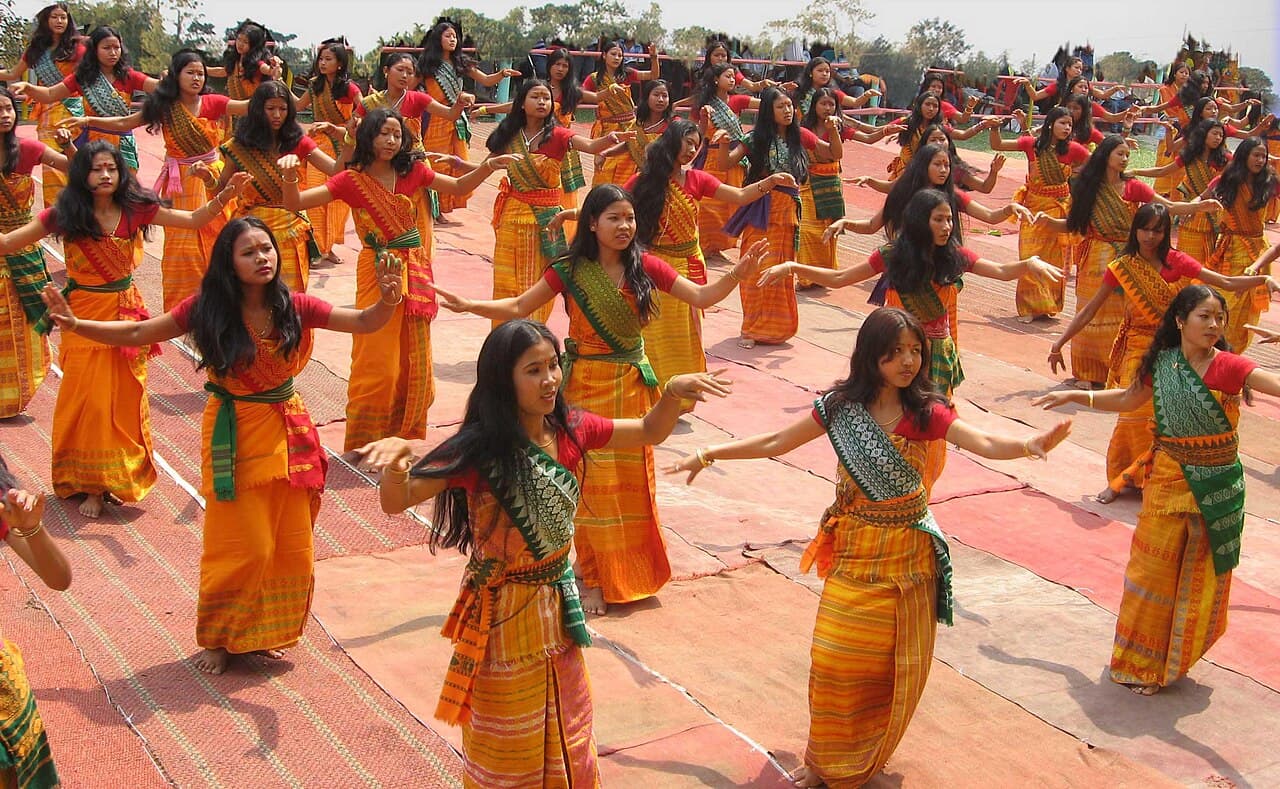
A traditional war-dance of the Garo community of upper Assam — performed by men in a circle with swords and shields, miming the courtly martial arts of the early Ahom kingdoms.
Understand
Where Khul (Khullana) comes from
Khul (or Khullana) is the traditional war-dance of the Garo community of upper Assam (the Goalpara and Kamrup regions of the Brahmaputra valley). The dance is performed in the context of the Garo weddings and the festival of Wangala (the hundred drums festival, recognised as the most important Garo festive occasion of the year). The dance tradition includes elements drawn from the martial-arts vocabulary of the early Ahom kingdoms (with whom the Garo had a long martial interaction). The dance is performed in the courtyard of the village or the chief's house, with the Garo warriors showing the formal gestures of the court-martial — the poised stance, the sword-cut, the shield-thrust and the bounding advance. The dance is performed at the Wangala festival and at ceremonial events of the Garo chief.
How it's practiced
Khul is performed by groups of Garo men, traditionally the warriors of the village, standing in a circle and performing coordinated martial gestures. The dancers carry the longsword (the chiltra) and the round-shield (the thuigot) and chant the heroic songs of their clan. Music is the gongs (the rang), the drums (the durra) and the percussion of the footfall. The dance is cyclical, with the lead singer-choreographer announcing the next movement and the dancers responding. Costume is the Garo ceremonial dress — the dhoti and the dhoti-kurta with the head-cloth, with the silver ornaments of the Garo tradition. Performances are at the Garo Wangala festival and at the community celebrations.
A traditional war-dance of the Garo community of upper Assam — performed by men in a circle with swords and shields, miming the courtly martial arts of the early Ahom kingdoms.
From discovery to practice
The Journey
Experience it
Book the Khul (Khullana) experience
Want to watch Khul (Khullana) performed live? Tell us when and where you'd like to experience it, and we'll confirm the details.
Bring it to your event
Hire Khul (Khullana) performers for your community, college or government event
Every performer WRIKSH connects you with has been personally verified. Tell us the occasion — a community celebration, a college festival, a government program — and we'll find the right group.

Hire performers of Khul (Khullana) for your event