
Performing Art · Jharkhand
Sohrai (Sohra)
सोहरई
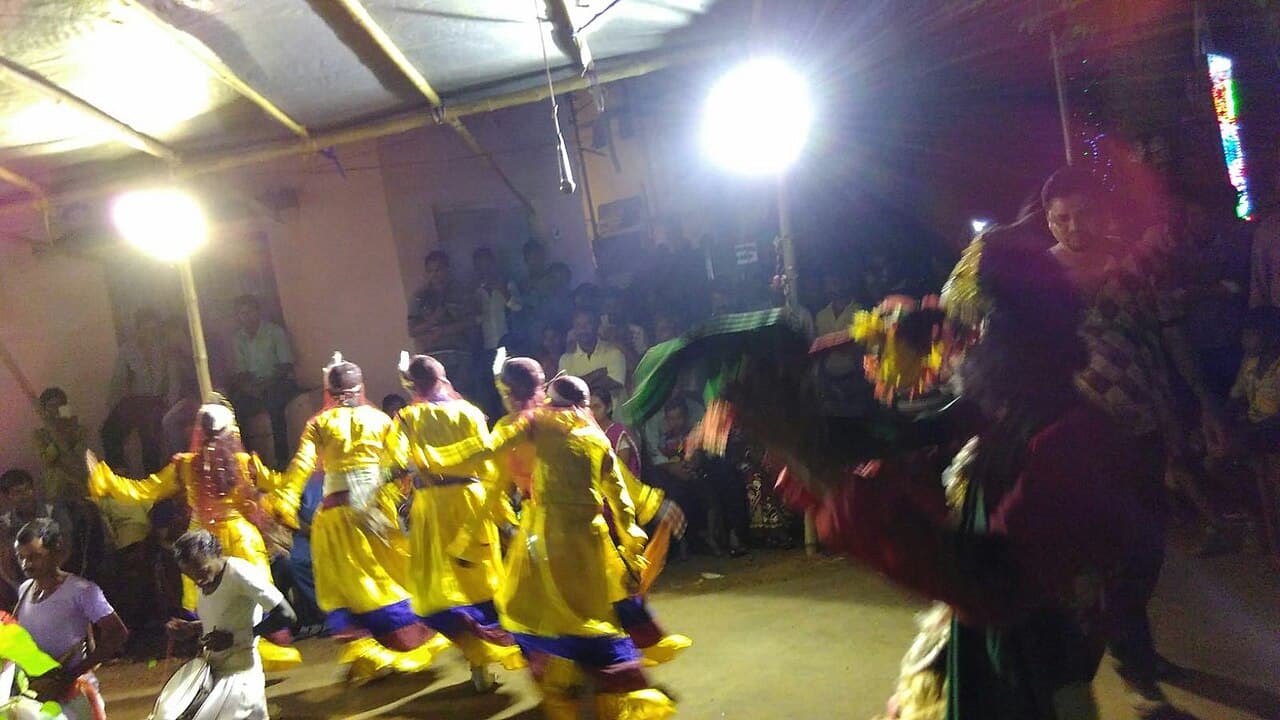
The women's harvest-dance of the Santhal and other Adivasi communities of Jharkhand — performed at the Sohrai festival of late October/November, with women painting the courtyard walls with rich khovar-style images and dancing.
Understand
Where Sohrai (Sohra) comes from
Sohrai is the women's harvest-festival tradition of the Santhal, Munda, Oraon, Ho and other Adivasi communities of Jharkhand, celebrated at the close of the late-October / early-November harvest as a thanksgiving for the rice crop. The festival is associated with the Sohrai goddess (and with the local god of the cattle), and Sohrai is celebrated with the women painting the courtyard walls of the village houses with elaborate khovar-style wall-paintings (the Sohrai khovar — a distinctive folk-art tradition of the Santhal Pargana and Hazaribagh districts) and with a women's night-time dance. The Sohrai tradition is recognised by the Government of Jharkhand as one of the most important festivals of the state and is celebrated with cultural pageants at the state and regional levels.
How it's practiced
Sohrai is performed by women of the Santhal-Munda-Oraon community in the courtyard of the village house during the Sohrai evening and into the night. The dance is gentle, with the women in a circle or in a moving procession, singing the Sohrai songs of the new harvest and the prosperity of the village. Music is the dhol, the small drum and the shehnai, with the women's claps and songs. The dance is preceded by the women painting the walls (the Sohrai khovar) and is followed by the shared harvest-food. Costume is the everyday Adivasi dress — the colourful sari for the women and the dhoti-kurta for the men, with the women's traditional silver and brass jewellery. The Sohrai dance and the Sohrai khovar are celebrated together throughout the late-October festive night of the village.
The women's harvest-dance of the Santhal and other Adivasi communities of Jharkhand — performed at the Sohrai festival of late October/November, with women painting the courtyard walls with rich khovar-style images and dancing.
From discovery to practice
The Journey
Experience it
Book the Sohrai (Sohra) experience
Want to watch Sohrai (Sohra) performed live? Tell us when and where you'd like to experience it, and we'll confirm the details.
Bring it to your event
Hire Sohrai (Sohra) performers for your community, college or government event
Every performer WRIKSH connects you with has been personally verified. Tell us the occasion — a community celebration, a college festival, a government program — and we'll find the right group.
Discover further
More traditions of Jharkhand
Hire performers of Sohrai (Sohra) for your event